

Infantilization of Markets
Monday May 4, 2026
1923 was a seminal year in market history. The Walt Disney Company was founded and Benjamin Graham incorporated his first asset management firm. The grocer Piggly Wiggly pulled of one of the most famous and dramatic short-squeezes in US history. Though not the first short-squeeze, that would probably be the cornering of Northern Pacific Railway in 1905, the failed attempt to corner Piggly Wiggly gave the public a great villain either Saunders or the NYSE depending on whether you were long or short yourself.
And people love stories of villains getting their comeupants.
Two more obscure but never-the-less important events also happened in 1923, little known candy and gum company, Fleer, started putting sports cards into packs of Dubble Bubble chewing gum and the Maple Crispette Candy Company decided to run a now notorious promotional campaign. If anyone collected a complete set of thirty baseball cards the company would give that person a complete set of sporting equipment. This generated a lot of sales.
Sales the company wanted. But, it didn’t want to give away any sporting goods so the company decided to short-print the #15 Casey Stengel card to make this a near impossibility. Which was also good.
Tobacco and cigarette manufacturers realized in the 19th century they needed to place a firm piece of cardboard in the back of their packages to prevent the product from drooping and slouching and falling over on the shelf. Nothing says “good smokes” like a limp package.
Allen & Ginter in a stroke of genius decided to print pictures on the cardboard stiffener but it took 40 years for Fleer to realize the card themselves could stimulate children into buying their product and Maple Crispette figured out how manipulate the consumer using the cardboard insert. What Fleer did probably had a greater affect on your life (if you are a millennial or a parent) than you realize. You can draw a straight line from Fleer to Pokémon which is one of if not the biggest brands on Earth. If aliens have visited this planet.
It was to buy a rare Pikachu card.
It took another decade and a depression, for the Goudy Gum Company in 1933 to go full genius demon-mode. Instead of short printing a card to keep kids buying gum they just decided to not print card #106 at all.
Like at all. This wasn’t an oops. This wasn’t a situation where 132 cards didn’t fit nicely on sheet of cardboard. This was Machiavellian intent to deceive.
But something happened the company did not expect. The plan worked too well and even though kids are little they too are quite viscious.
By not printing card #106 kids all around the country had chewed and chewed and chewed and by 1934 they knew something was up and letters started arrive at Goudy headquarters asking “Where the fuck is #106?”
So the company had to print one.
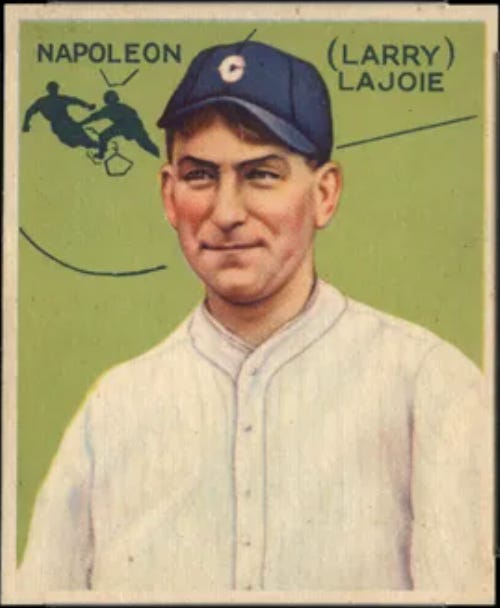
There is a long history of manufacturing scarcity and market manipulation in chewing gum. But what happened eventually was the manipulation became the product. By the 1950s children wanted to sports cards more than the gum. In the 1970s, manufacturers realized no matter how much they printed and how crappy the cards were kids would still buy them. Then in the 1990s manufacturers realized adults were buying more cards than kids. And adults have more money to spend and expect shinier products.
A similar thing happened in cinema. The MCU was meant to sell toys to children. It ended up that the films were a better product and that adults started buying the toys.
Now today there is an entire industry established to create scarcity. Cards are short printed both as as set and within a set. Cards are scored and graded and packaged into cases. And it’s has now rolled over into the equity market. There are alternative investment funds buying rare cards. It was just a matter of time before this slid its way into the public market.
And it just did. Gamestop just decided to try and buy Ebay.
Ebay is essentially a sports card market place at this point. With Ebay live taking off. Gamestop is essentially a collectibles grading middle man. The merger makes sense…
for Ryan Cohen who will make billions of dollars if this goes through.
If you read Ryan Cohen’s bonus structure you will see that he gets shares based on market cap. And market cap can go up organically by increasing revenue which will drive the stock price OR by just printing shares. Not revenue. Market cap.
Printing shares to say buy a much larger company for example increases market cap. Nifty trick.
Between Gamestop and Space-X, the US public sector has completely switched purposes. Companies no longer are using manipulation to generate revenue and sales for an actual product to drive the stock price. There is no intent to generate revenue anymore. It’s just manipulation for manipulation’s sake.
Every generation has some slime balls that takes the next step from deciding to short print a card to just not printing to over printing to limited printing. Media call them geniuses. They aren’t. They just lack a fundamental part of the brain the rest of us have that says “don’t manipulate children.”
There is no gum anymore ie dividends, etc. Just a trade stimulator that you have to find someone else down the line to buy. This has always been the case in penny stocks.
It’s just now the case in the entire US public sector. And, I am curious just how bad this is going to get. Would WeWork have been allowed to IPO in 2026?
By the way, Maple Crispette printed so few of the Casey Stengel that it’s one of the rarest cards in the hobby today. You see there is only one known copy of #15 from the 1923 Maple Crispette set.

Though being 1 of 1 means very little now. There are literally hundreds of 1 of 1 cards printed every year now. If you do a search for 1/1 in Sports Trading Card singles on Ebay you get back 500k+ results.
Soon the entire US economy is going to be dependent solely on the ability of people to continue to pay higher prices for businesses that are just debt-ridden fantasies.
Without more money printing I don’t see how that can happen. We have turned the entirety of the public sector into a game for children. People used to take pride in building something. Now they just take pride in building personal wealth.
I don’t think is necessarily a problem right now. But, it will be a problem eventually.
-AJ