

MACRO:
This went around social media today. And a lot of people are misunderstanding what this shows.
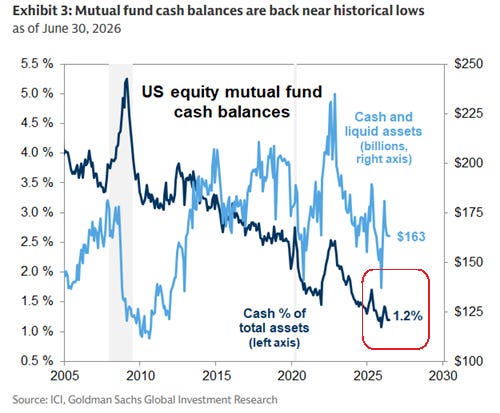
This reflects that the people who own the market won’t feel any drawdown for awhile because even though they are exposed to the market at an all time high rate they are still sitting on plenty of cash.
I’ve talked about this before. Family office’s are flush with cash and have nowhere to put it. The office I manage has been sitting mostly in cash since last December. We are still beating the market while still carrying cash. It’s pretty amazing to beat the market with <20% exposure.
The amount of “free powder” by percentage is at an all time low but nominally it is exactly where it was in 2008 right before ultra high net worth individuals bought the dip.
Now, the reality is since 2000 the number of ultra high net worth individuals practicing buy-borrow-die financing as sky rocketed so what is important (and what no one knows) is what percentage of those assets held (both stock and real estate etc) has been used as collateral to buy other assets. Like the Lakers, Suns, beach houses, or stock. This mostly affects new money which includes tech CEOs. What new money (think Softbank) has done is given themselves stock. As that stock goes up in value they buy more stock. New money isn’t diversifying so their exposure to this market is extreme.
In the 1990s, only the uber wealthy used this strategy. But, now anyone with stock options seems to use it. There is a big difference in risk between owning a 100 gas stations and borrowing 1% of the value to live on and own stock in a tech company and borrowing 40% of the market capitalization of that stock to live on.
Situational Awareness (Archegos 2.0) is a direct result of this idea of buy-borrow-die blowing up. He was borrowing against his stock holdings to buy more of the same stock.
I estimate that number is around 4% but I have been in discussion with people who predict that number is around 20%. That is 20% of assets are already borrowed against. If that is true and anything were to happen the fall in asset prices would be beyond comprehensible.
Citadel couldn’t stop the selling. You are going to see a lot of assets start being sold. Guggenheim is already in trouble. If not for Citadel, Morgan Stanley would have been in trouble over SALP.
It is counter intuitive that illiquid assets will be sold first. A sports team is harder to sell than a stock BUT the problem is when you borrow against a stock it isn’t yours anymore. If you receive a maintenance call you have to add cash to your account.
MICRO:
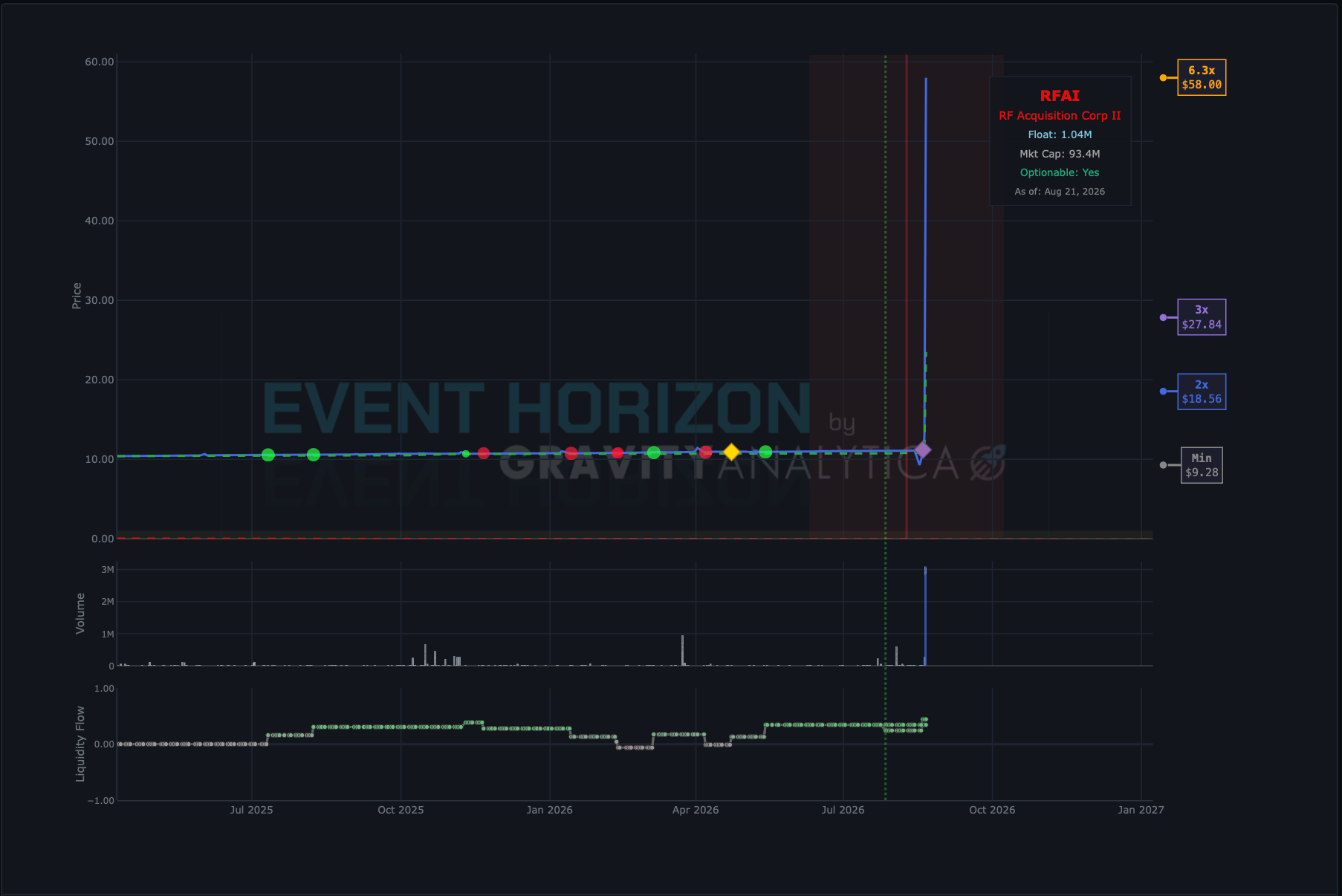
Here is everything you need to know about SPACs.
Retail short them.
If the company has high redemptions the liquid float will go instantaneously negative as shares are called off loan and the stock will spike. Even if only 50k shares had been short out of 1 million after the vote and redemptions the float was inverted.
$RFAI’s float fell to 40k shares yesterday.
Shkreli used this trick to spike $KBIO a few years ago.
—AJ